Fell From Heaven
💪 Want a daily roundup of ALL my nonsense across various places? Too Much Kyle is here to help, for better or worse.
🗞️ Reading Recs
Want more links? Visit the Link Shack.
The Cursed Generation
COVID wrecked high school. AI is coming for their first jobs. Good luck to the new grads.
 Ryu Spaeth
The Boring Internet
The internet you grew up on isn’t dying. A commercial veneer glued on top of it is. A visual essay about what actually persists.
 Terry Godier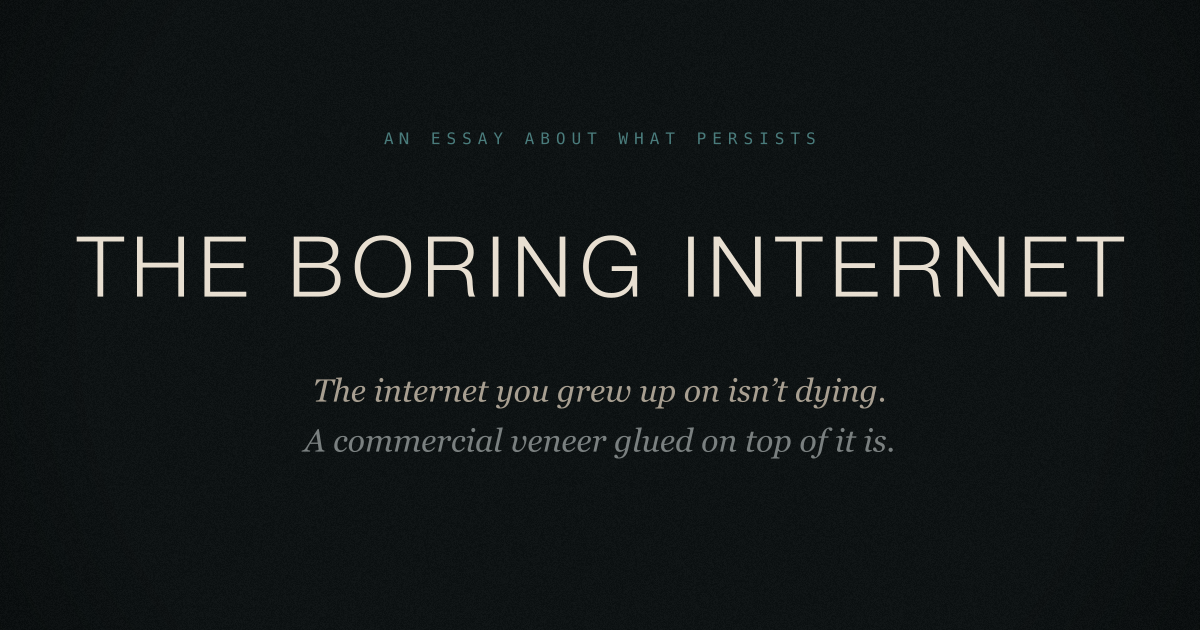
This Is The Most Important Skill You Can Have In Life - RyanHoliday.net
I’m going on tour next month (Portland and SF) and then a bunch of other places around the world in the early fall. Come see me talking Stoicism—grab tickets here. I hated writing essays in high school, but they changed my life. Not because of the subject matter or anything. With one exception, I can’t remember what any of them were about. The one I remember is an 11th-grade English assignment. My teacher had us write an essay on this prompt: “Analyze how and why The Great Gatsby is an exploration of the American Dream as it exists in a corrupt period.” The day after I handed in my essay, Mrs. Kars printed it out and we spent the entire period reviewing it with the class. It was the first time anything I had ever written had been recognized. Now that I think about it, it may have been one of the first times in my life that I had ever felt like I might be anything but average. I would later ask Mrs. Kars for a letter of recommendation to a college I did not get accepted to, but I can still remember a line from it. “I have no doubt,” she said, “that Ryan will someday be a literary giant.” I don’t know about that. But I can say that that essay—which upon re-reading is not that good—and the many others I had to write did what essays have done for generations of young people: they taught me how to use my brain. In having to write them, I learned how to think, I learned to think hard about something and then most importantly how to articulate what I thought about it. This is slow, tedious, difficult work. It takes discipline and patience. The hours and hours of sitting with frustration and confusion. It takes trial and error. In Wisdom Takes Work, I tell a story about Eisenhower when he was a promising young general. Just days after Pearl Harbor in 1941, he was called in to see George Marshall, the chief of staff of the US Army. Japan was going to seize the Philippines and dozens of other islands in the Pacific, Marshall explained. America faced a war in two theaters with supply lines stretching thousands of miles. “What should be our general line of action?” Marshall asked Eisenhower. A certain type of officer would have started thinking out loud, riffed, brainstormed. Not Eisenhower. His career and potentially millions of lives hung in the balance. “Give me a few hours,” he said. At a spare desk in the War Plans Division, Eisenhower requisitioned paper, a pen, and a typewriter and got to work. What did Marshall want to accomplish? What was possible? What was of the highest priority? What risks were acceptable? After a period of reflection, he wrote his thoughts out. What Marshall needed was “short, emphatic…reasoning,” not “oratory, plausible argument, or glittering generality.” The writing exercise helped him synthesize ideas from conversations he’d had with his mentor General Fox Conner, from books he’d read, from courses at the Army War College, and from his three decades in uniform. As dusk fell, Eisenhower handed Marshall a three-hundred-word briefing on yellow lined paper titled “Assistance to the Far East/Steps to Be Taken.” Almost certainly Marshall had already considered most of what Eisenhower had written. The assignment was, in a way, a test. What kind of a thinker was this young officer? How did he approach problems? How good was he at responding under pressure? Could he see the big picture? Could he effectively communicate what he knew and what he wanted to do? “I agree with you,” Marshall eventually replied about Eisenhower’s plan, and then told him to execute it. Thus began one of the most effective partnerships of the war, propelling Eisenhower to the presidency. Successful campaigns and careers—whether they involve leading people into battle or saving their souls or selling them things—depend on this kind of thinking process. This is what worries me about what AI is doing to writing—and the school essay especially. As I write this line, not only does software make suggestions on spelling and help me eliminate errors, it suggests how I might finish sentences or word them better. If I want, I could simply click over to other software and ask it to write the draft for me. But these fast, easy ways to produce what resembles a finished piece of writing would defeat the purpose. Which is to engage and struggle with the material for an extended period of time. To take my time. To go over things again and again. To be immersed. To be focused, patient, and disciplined. To come to understand things deeply. A couple of years ago, I asked Robert Greene what he thought about AI. “I think back to when I was 19-years-old and in college,” Robert said. It was a class where they were to read and translate classical Greek texts “They gave us a passage of Thucydides, the hardest writer of all to read in ancient Greek,” he explained. “I had this one paragraph I must have spent ten hours trying to translate…That had an incredible impact on me. It developed character, patience, and discipline that helps me even to this day. What if I had ChatGPT, and I put the passage in there, and it gave me the translation right away? The whole thinking process would have been annihilated right there.” For an entire generation of young people, the whole thinking process is being annihilated. How will they figure out what they think? How will they develop critical thinking skills? How will they develop focus, patience, discipline? How will they come to understand things deeply? We think as we write. Indeed, we cannot finish a sentence until we have carried the thought all the way through. We ponder opposing ideas as we pause between keystrokes, the pen becomes our third eye. On the page we see the pattern. Transcribing the [...]
 Ryan Holiday
📺 Weekend Watches
Want more recommendations? Join us in Stream Team!
🦣 Federated Finds
Want more posts? Follow along on Mastodon and Bluesky.
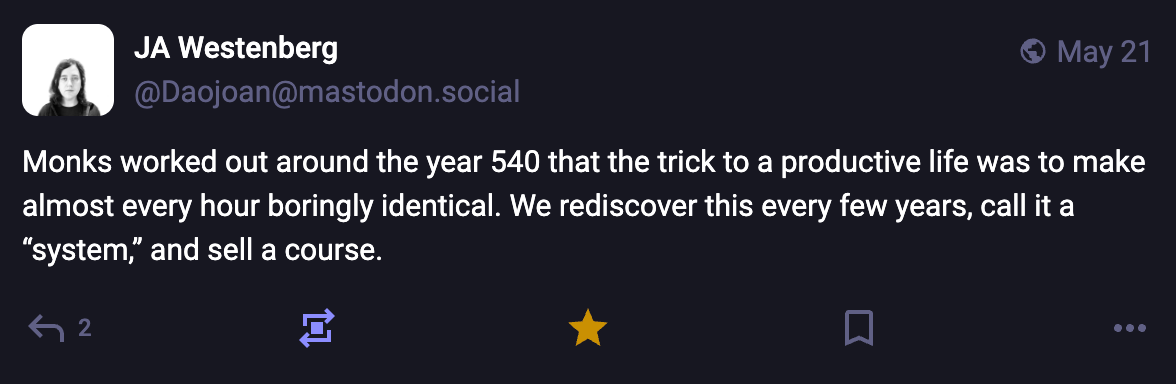
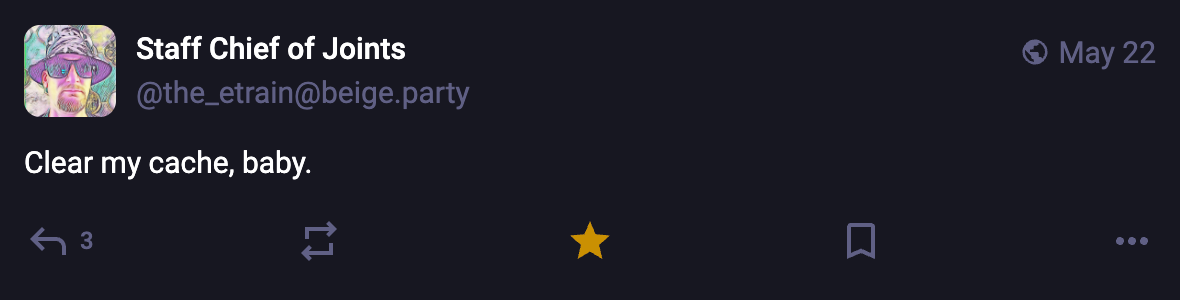
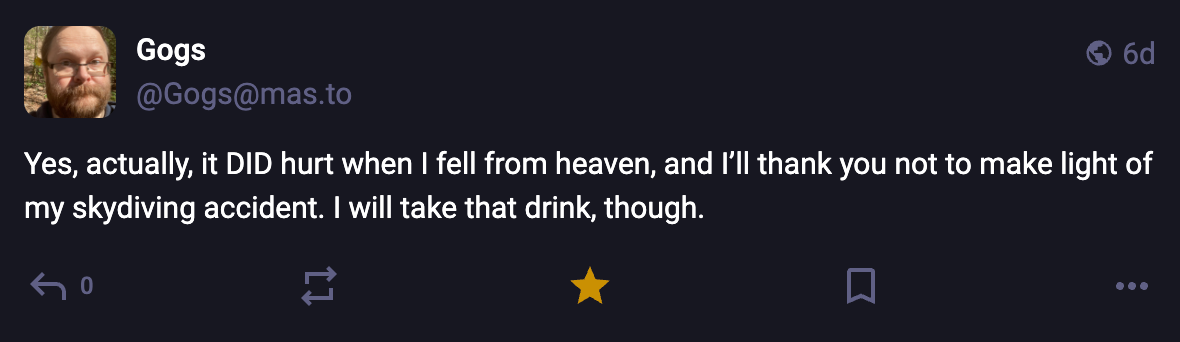
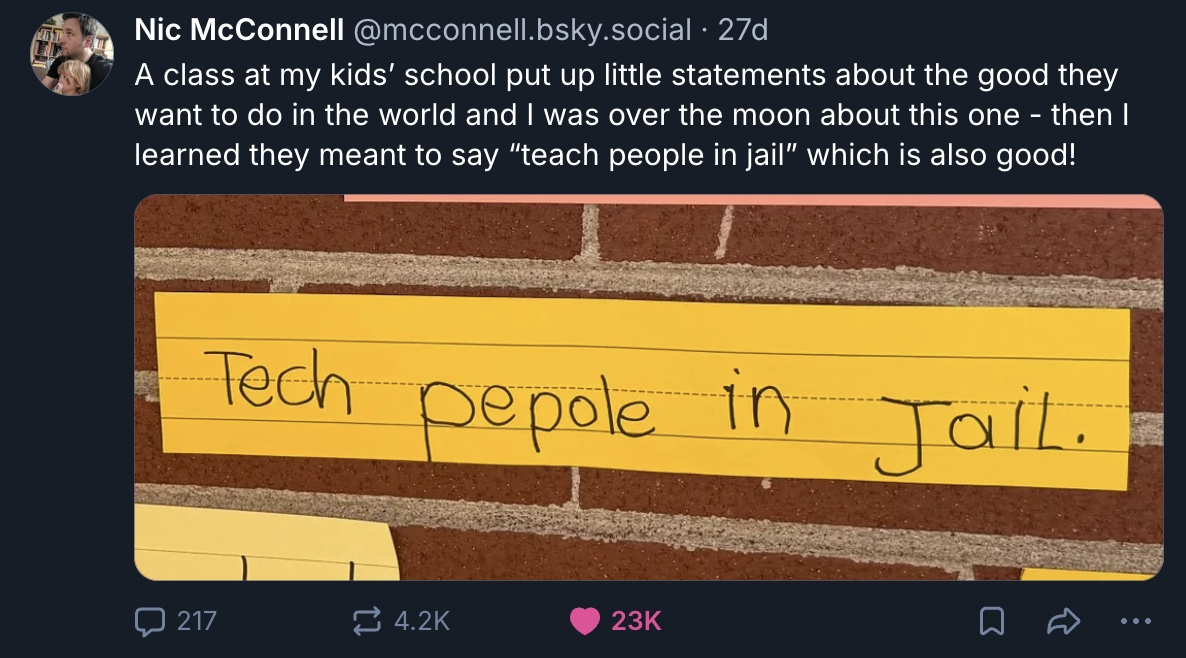

🩳 Salute Your Shorts
🤖 ARTificial Antics
🏁 Closing Clips